


From RealDoll to $125K Robots: Realbotix's Corporate Pivot
From RealDoll to Real Business: How Realbotix Shed Its Sex Toy Roots to Become a $125,000 Corporate Robotics Contender
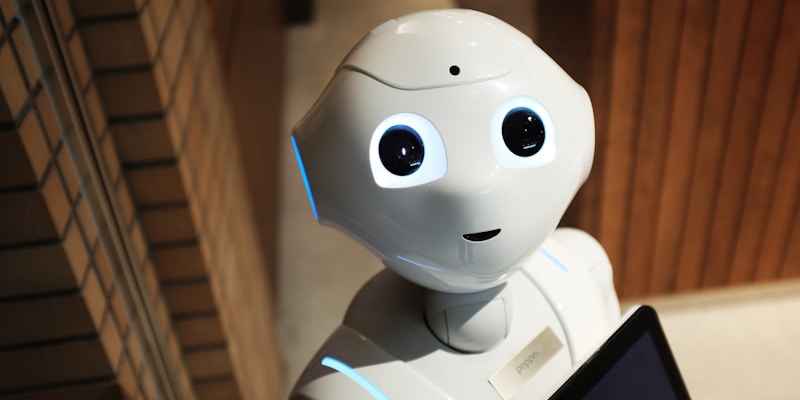
Table of Contents
The Rebranding of a Legacy: From Abyss Creations to Public Company
Few companies in the sex doll industry have undergone a transformation as radical as Realbotix. What began as Abyss Creations — the California-based manufacturer of the famously lifelike RealDoll line, immortalized in the 2007 film Lars and the Real Girl and countless media profiles — has been systematically remaking itself into something entirely different: a publicly traded B2B robotics company that, according to its own executives, is not in the sex robot business at all.
The transformation began in earnest in 2024, when Canadian entrepreneur Andrew Kiguel acquired Abyss Creations and promptly split the company into two divisions. One, retaining the Abyss Creations name, continued to serve the direct-to-consumer adult market with the classic RealDoll line. The other, Realbotix, was positioned as a technology company focused on humanoid robotics for enterprise applications — hospitality, casinos, retail, healthcare, and corporate environments. The old identity as a sex doll maker was not hidden, but it was carefully managed. The company's 2026 messaging is explicit: "Realbotix robots are not capable of physical intimacy."
Listed on the OTC market under the ticker XBOTF, Realbotix has attracted a new class of investors who would never have considered owning stock in a sex doll company but see potential in a robotics firm targeting the enterprise market. The IPO and subsequent capital raises have funded expanded engineering capacity, a modular face-swapping patent portfolio, and advanced computer vision systems that allow the robots to recognize social cues and engage in natural conversation.
Two Businesses, One Company: The Abyss and Realbotix Split
The bifurcation of the company reflects a strategic calculation that is being watched closely by the rest of the industry. By separating the consumer adult business from the enterprise robotics business, Realbotix has created two distinct brand identities, two customer bases, and two regulatory profiles. The adult business operates in a world of obscenity laws, age verification requirements, and platform content policies. The robotics business operates in a world of employment law, hospitality industry standards, and health care regulations. The two have almost nothing in common except their technological heritage.
The Abyss Creations division continues to produce RealDolls, and the company has not abandoned the market that made its name. But the investment dollars — and the executive attention — are increasingly flowing to the Realbotix side of the house. The adult business generates cash and brand recognition. The robotics business generates growth stories and investor excitement. The question, which the market is still evaluating, is whether a single corporate structure can effectively serve two such different masters.
From a technological standpoint, the synergies are real. The work that Realbotix does on facial expression, voice modulation, and conversational AI for its enterprise robots builds directly on decades of experience creating realistic human faces and bodies for its adult products. The modular face-swapping system that allows a hotel concierge robot to change its appearance for different events was originally developed for customers who wanted to customize their RealDoll's features. The B2B business is, in a very real sense, a spin-off of the knowledge generated by the adult business — even if the company would prefer to emphasize the former over the latter.

The F-Series and Aria: Robots That Cost More Than a House
Realbotix's flagship enterprise product is the F-Series humanoid, a full-size robot that stands approximately 5 feet 7 inches tall and is designed to serve as a receptionist, concierge, or customer service representative. The most famous model is "Aria," whose base configuration is priced at approximately $125,000 — roughly the cost of a luxury car or a modest house in many American markets. For customers who need a less expensive entry point, Realbotix offers a tabletop torso version starting at $20,000.
The F-Series robots are equipped with a proprietary social AI engine that can run third-party large language models — including ChatGPT, Anthropic's Claude, and Google's Gemini — or use Realbotix's own conversational software. The robots feature robotic vision systems that recognize faces, interpret social cues, and maintain eye contact during conversation. The modular face system allows organizations to customize the robot's appearance to match their brand or to change it for different applications.
The use cases Realbotix targets are varied. In hospitality, the robots serve as lobby greeters that can check guests in, provide directions, and answer questions about local attractions. In casinos, they function as hosts that can guide patrons to tables and provide information about promotions. In healthcare, they serve as intake assistants that can gather patient information and direct them to the appropriate department. In corporate settings, they work as receptionists that can manage visitor check-in and notify employees of guest arrivals.
The B2B Pitch: Robots Cheaper Than Employees
Realbotix's core value proposition to enterprise customers is economic. A full-time human concierge or receptionist costs approximately $75,000 per year in salary and benefits in most US markets — and often significantly more when recruitment, training, and turnover costs are included. A $125,000 robot that lasts five years costs $25,000 per year, with no benefits, no sick days, and no turnover. The robot also works 24 hours a day, seven days a week, and can be deployed across multiple shifts without additional staffing.
This economic calculation is compelling enough that Realbotix has reportedly secured pilot programs with several major hospitality chains and healthcare systems. The company's challenge is scaling from pilot to production — proving that the robots can operate reliably over months and years in real-world environments, and that customers (hotel guests, patients, visitors) will accept interaction with a robot as a satisfactory substitute for human contact.
Early evidence suggests that acceptance varies by context and demographic. Younger customers and tech-savvy environments show higher acceptance rates. Older customers and settings that involve sensitive or emotional interactions tend to prefer human staff. Realbotix's strategy is to position its robots as supplements to human workers rather than replacements — handling routine inquiries and freeing human employees for higher-value interactions.
What Realbotix's Pivot Signals for the Sex Doll Industry
Realbotix's transformation from sex doll maker to enterprise robotics company is the most dramatic example of a trend that is reshaping the broader industry: the technological convergence that is turning passive silicone figures into platforms for artificial intelligence, computer vision, and natural language processing. The same capabilities that make a hotel robot useful — conversational AI, facial recognition, expressive movement — are the capabilities that make a 2026 sex doll qualitatively different from its predecessors.
The industry is watching Realbotix's experiment closely for several reasons. If the B2B pivot succeeds commercially, it could open a new revenue stream for other manufacturers with advanced AI capabilities. If it fails, it may demonstrate that the technological hurdles to practical humanoid robotics remain higher than investors expect. Either way, the Realbotix story has already changed how the industry thinks about its own future. The division between "sex dolls" and "companion robots" was always somewhat artificial. Realbotix is simply the first company to try to build a public company on the other side of that line.
"Realbotix robots are not capable of physical intimacy. This is not a limitation of our technology; it is a fundamental design choice that defines our product category and our market." — Realbotix corporate positioning statement, 2026


